Showing posts with label for veterinary nurses. Show all posts

Tuesday, September 10, 2024

The Vet Cookbook is BACK!

VetCookbook Salad (c) Smallanimaltalk 2024
Does assembling a salad in a jar count as cooking? Absolutely!

You might have heard about the Vet Cookbook?

If not, it was essentially a compilation of recipes and stories to promote wellbeing among veterinary team members. People from every area of the veterinary sector – from veterinary nurses, technicians, practice managers, animal attendants, academics, specialists and GPs and even those who had left practice – sharedrecipes.  

Like our patients, veterinary team members need fuel. It’s even better if that fuel is pleasurable to eat! Sharing food is a wonderful way to come together, support and nourish each other.

It is hard to believe but the Vet Cookbook was published by the Centre for Veterinary Education back in 2017.

We had some fabulous submissions. It was a tough job pulling it together (I was part of a team of dedicated co-editors, including Deepa Gopinath, Lis Churchward, Asti May and Jenna Moss Davis) but we did it.

vet cookbook dog mud cake (c) Smallanimaltalk 2024
Chocolate hazelnut "Dogs-in-the-mud cake".

The not-for-profit cookbook sold two print runs and is now a collector’s edition. With the funds raised, we held several events including a wellbeing day (talks can be viewed on the CVE’s Mental Wellbeing Hub) and two sold-out writing courses taught by outstanding Australian authors Tracy Sorensen (The Lucky Galah, The Vitals) and Brendan James Murray (The Drowned Man, Venom, The School). This year, the Vet Cookbook is back. 

That’s right, we’re working on the Vet Cookbook II. The theme is “celebrating the wins” – we want to hear from all veterinary team members, near and far, about what you enjoy about working in the sector. Our editorial team includes Lis Chuchward, Kimberley Blackett, and Sharmila Kumaran (you might recall her as the author of the decadent strawberry cheesecake in VCB I!) 

And we’d love to hear your favourite recipe!

For those who are creatively inclined, we’re also keen for submissions of images of artwork (e.g. could be a painting or drawing, poem, creative writing, sculpture or composition).

We’ve already had some brilliant and creative submissions, ranging from simple recipes to the more complex, to wood block prints, drawings, paintings and photos, and we’ve got room for a few more. You can upload your submission here:

https://form.jotform.com/241008103636849

Please don’t be shy! We’d love you to be part of this – or give a gentle, encouraging nudge to that person in your workplace who loves making food. Please follow the VCB FB page for updates: https://www.facebook.com/vetcookbook/ 

Thursday, October 28, 2021

Veterinary bibliotherapy: The Chloroformist, by Christine Ball


The Chloroformist by Christine Ball, pictured here with a stinger anaesthetic machine.

Have you ever wondered what the experience of undergoing surgery would be like without anaesthesia? In The Chloroformist, written by anaesthetist and Woodford Library Museum history of anaesthesiology laureate Christine Ball, provides some vivid descriptions as she tells the compelling story of anaesthetic pioneer Joseph Clover.

As part of my PhD research, I’ve been researching advances in veterinary care and associated ethical challenges (you can read more about that here). 

One of the most important advances in healthcare – of humans and animals – is anaesthesia. It is difficult for most people to comprehend surgery without anaesthesia, particularly major surgery. Aside from causing patients fear, anxiety and distress, it increases the risk of infection (it is very challenging to maintain a sterile field if the patient is trying to escape) and injury (to the patient and/or operators). Lack of anaesthesia means that surgeons must operate much faster, with less time to attend to finer details, and increased risk of error.

Clover, a surgeon, developed an interest in anaesthesia, and become one of the most highly skilled and renowned experts in its delivery – particularly chloroform - during his lifetime.

According to historical records, the first major surgery in a human patient involving an anaesthetic occurred in 1846. Prior to the routine use of anaesthesia, surgery was brutal. For example, Ball documents the surgical treatment of men with bladder stones. 

Bladder stones I removed from a dog via cystotomy, performed under a full general anaesthetic.

Having removed these from animal patients – all under full general anaesthetic, and all treated with post-operative analgesics – it is hard to contemplate doing so on a conscious being. As I read this book, I could not help but reflect on the history of veterinary medicine, and be grateful that I work at a time when anaesthesia and analgesia are utilised routinely (and are of course still being refined).

Clover, a breathtakingly conscientious doctor and scientist, described by an equally breathtakingly conscientious Ball, kept detailed records of his anaesthetics. He was known for his gentle manner, reassuring patients (fear may have increased the risk of anaesthetic complications), as well as his commitment to careful patient monitoring. As someone who had trained as a surgeon, Clover was able to cultivate close working relationships with surgeons, improving outcomes for patients. When anaesthetic complications occurred, he would trouble-shoot these, and he invented and refined various devices for administering anaesthetics safely to patients.

The book will appeal to anyone interested in the history of medicine, anaesthesia, analgesia and surgery, and animal experimentation – an unregulated practice at the time.

The Chloroformist is meticulously researched and beautifully constructed.

The brief, final chapter is a surprising masterstroke. I found myself crying on the bus as I turned the last page. Someone please turn this into a television series!

Reading this book has left me with a desire to take a tour of the Geoffrey Kaye Museum of Anaesthetic History when it reopens. What an extraordinary resource.

The Chloroformist, by Christine Ball, is available from Melbourne University Press, RRP $34.99.  

Monday, July 19, 2021

Veterinary Bibliotherapy: Burnout – A Guide to Identifying Burnout and Pathways to Recovery

“...you might suppose that burnout rates would be highest in those whose work simply because they have to, be less evident in those whose work furnishes them with a career, and lowest of all in those who are passionate about their work. We, however, argue that the inverse applies, as burnout rates appear lowest in those who work simply as a job, higher in those who view their work as a career, and highest in those whose work is at the level of a 'calling'.”

(Gordon Parker, Gabriela Tavella and Kerrie Eyers, Burnout: A guide to identifying burnout and pathways to recovery.

Burnout is a hot topic right now, particularly in the veterinary profession due a proliferation of recent studies documenting high levels of burnout among veterinary team members.

When I first heard the term, I can't pinpoint the date but I'm guessing two decades ago, burnout seemed very much framed around the individual. Maybe people who went too hard and, like a candle, simply burned to the wick. When I began my career, people said “don’t work too hard or you’ll burn out”, as if there were a threshold level of work beyond which burnout became a certainty.

In contrast, people were also saying things like “do what you love and you’ll never work a day in your life”, “immersion is the key to success”, and “you need to get as much experience as you can”. People talked about work-life balance, but they behaved according to the mantra that good veterinary team members worked hard.

Since then, there seems to be much debate about the biggest problems in our profession: is our main scourge compassion fatigue? Empathy fatigue? Moral distress? Secondary trauma? Burnout? Which of these are responsible for career attrition or rates of suicide in our profession?

It is against this background that I read Burnout: A Guide to Identifying Burnout and Pathways to Recovery by Gordon Parker, Gabriela Tavella and Kerrie Eyers (Allen &Unwin). This book manages to discuss, in an engaging way, the evolution of the understanding of burnout, what it is, and what it isn't, and what we need to do about it.

Burnout isn't a medical diagnosis (at least not yet). According to the World Health Organisation InternationalClassification of Diseases (ICD-11, 2018), burnout is a syndrome comprising

  • feelings of energy depletion/exhaustion
  • increased feelings of detachment from one's work, or feelings of cynicism or negativity
  • decreased professional efficiency. 

According to the authors of Burnout, compassion fatigue may be a component of burnout, “being part of a broader 'inability to feel' or lack of joie de vievre”.

The authors explain that there is no single magic bullet, no single brain or endocrine pathology to target, no proven pharmacological cure, and no one-size- fits-all plan to treat burnout. They do stress that any strategy requires addressing both the worker and work conditions. The individual and the system they work within. And by work they also mean the work of carers.

Most scientific papers I've read on burnout to date utilise the Maslach Burnout Inventory (MBI) to measure burnout. The authors of this book developed the Sydney Burnout Measure (SBM), and used it to perform a number of large studies on burnout which they argue revealed different features of burnout. One example is the presence of cognitive impairment, which may manifest as difficulty concentrating or poor memory. They also found an association between perfectionism and burnout. Relatable?

The authors talk about occupations at high risk, including doctors, nurses, lawyers, managers, police and veterinarians.

According to Professor Parker, factors increasing the burnout risk for veterinarians include long hours, high university debt, low remuneration, difficult interactions with clients, animal death and euthanasia. High levels of perfectionism have been reported among veterinary professionals.

“Prevention strategies would require addressing salient drivers and handling perfectionism,” he said.

While burnout isn't a medical diagnosis, the authors warn that employers should take appropriate precautions and limit liability.

The book outlines the key components of addressing burnout:

  • addressing work issues
  • adopting strategies to manage stress
  • address the trait of perfectionism

It contains a number of in-depth case studies, as well as mentions of well-known figures who have been alleged to have burnt out over time. I didn't know, for example, that Florence Nightingale and William Osler likely suffered from severe burnout at times in their illustrious careers.

The book's appendix contains the Sydney Burnout Measure, a checklist of workplace triggers and a perfectionism scale.

Overall this is a very readable book. It is based on science, and written by the scientists who undertook the studies it is based on, yet it is accessible and even – I dare say – enjoyable to read. 

Wednesday, February 10, 2021

Online creative writing workshop for veterinarians, nurses, technicians and veterinary team members in March


Delegates at the Mental Wellbeing for Veterinary Teams symposium in 2019.

What has creative writing got to do with veterinary teams? Creative writing can be a vehicle for self expression. It can be a pleasure indulged in privately, or an opportunity to paint word pictures for an audience. It can be a therapeutic brain-dump or a chance to experience flow.

As readers of this blog may be aware, I was one of four co-editors of the Vet Cookbook, an initiative to promote mental wellbeing in vets, nurses, technicians, kennel hands, groomers, practice managers, laboratory scientists, teachers, technical services vets – i.e. anyone who has anything to do with veterinary teams.

The Vet Cookbook generated some proceeds, most of which we used to subsidise the Mental Wellbeing for Veterinary Teams conference in 2019 (remember then? Back before COVID-19?). For those of you who missed it, videos of the talks given on that day are now available on the Centre for Veterinary Education’s Mental WellbeingHub

There are many things we can do to improve mental wellbeing, including promote engagement and flow. To this end, we’ve been working with some wonderful writers who have agreed to run writing workshops for veterinary team members.

The workshops are offered via Zoom, so totally COVID-safe (unless you happen to be Zooming from a nightclub, but then, what is a nightclub again?).

The first is a two-part workshop run by Tracy Sorensen, award winning author of The LuckyGalah (long-listed for the Miles Franklin Award) and Charles Perkins Centre Writer in Residence. The workshops will be held across two weekday evenings in March.


I had the pleasure of meeting Tracy Sorensen after she gave a webinar on her upcoming book - a cancer biography told from the perspective of her organs. I read The Lucky Galah which was one of the most unexpectedly joyful books about luck and life. I was fortunate enough to attend a brilliant writing workshop she ran at the University of Sydney. 

Tracy oozes creativity and warmth, and has a fascination for animals and an appreciation of the people who work with them. If you have not yet read The Lucky Galah, I recommend it. Set in a remote coastal town in Western Australia in the late 1960s, the time of the Moon landing, it is the tale of two Australian families, told from the perspective of the Galah that lives in a cage between the back of the house and the outside dunny. This book was so evocative...I felt like I was in WA, experiencing the sights and smells. 

(c) Tracy Sorensen 2021
Tracy Sorensen.

Places at this writing workshop are limited. If you would like more information, wish to register or know a friend who might be keen, please follow this link.

Tuesday, July 28, 2020

Planning for people and pets during crises, making pet adoption equitable, and more citizen science for pet owners

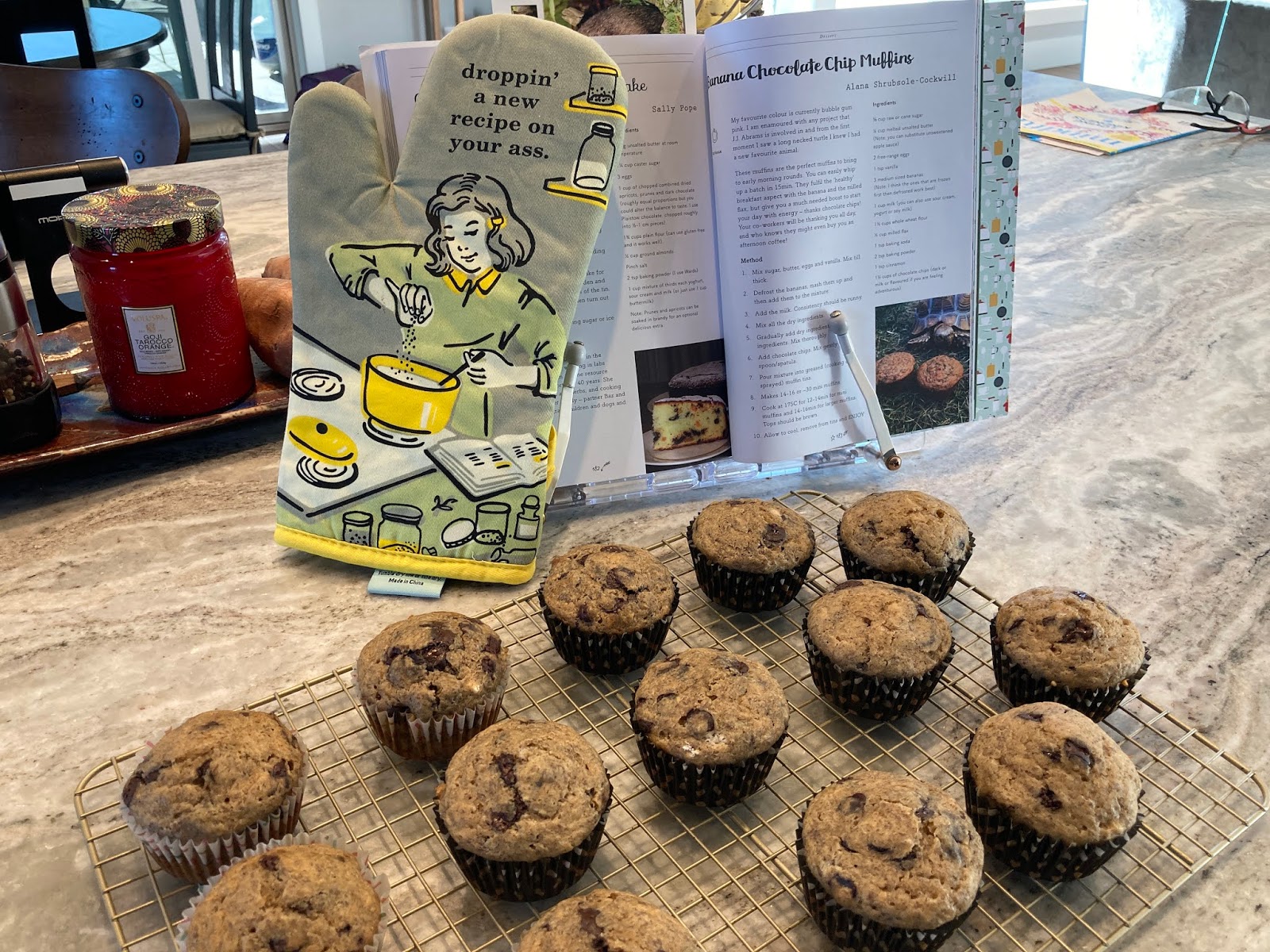
Dr Sonja Olson baked the banana chocolate chip muffins from the Vet Cookbook to fuel her morning run. Loving the oven mitt!


This week, I want to share a few resources which may be of interest.

You may not be aware, but one of the negative aspects of the Covid-19 pandemic has been an increase in reports of domestic and family violence. Lucy’s Project, founded by the tireless Anna Ludvik, is hosting a webinar about the Concurrent Crises we are facing on August 17 at 1pm.
The webinar will explore how we can plan for animals during bushfires, droughts, pandemic(s) and other crises, as well as safety planning for families with animals who are experiencing DFV. The webinar is available free of charge but participants are welcome to make a donation. Click here for more info.

This webinar is part one of a three-part series.

CARE – Companions and Animals for Reform and Equity – is a US-based organisation established to address organisational and personal biases within animal welfare and advocating for a more inclusive path to pet adoption. The website contains some harrowing but ultimately uplifting stories of companion animals being adopted by those who initially faced discrimination or inequity. Check them out here.

Our colleague, Wingham and Valley Vets veterinarian, Dr John Dooley, retired earlier this year. He contributed an incredible personal essay to The Vet Cookbook, as well as some brilliant tips for new graduates in the CVE’s Recent Graduate Survival Seminar. He has been an advocate of mindfulness and meditation, as well as mentoring, in the veterinary profession. In an era where the attrition rate of veterinarians is high, and where there are shortages of veterinary professionals, its great to read about a 45-year-long career in this comprehensive article in Dr Dooley’s local paper which you can read here.

Finally, whether you work in the veterinary profession or not, if you identify as a pet owner, parent or guardian your knowledge can help citizen science. The study is exploring the risks and benefits of pet ownership during a pandemic.

To participate, click here.  

You can also opt-in to the very first longitudinal study tracking pet owner wellbeing and animal welfare.

Tuesday, July 14, 2020

Some citizen science for veterinary team members

Equine veterinarian, equine, horse, horse dvm
Drawn by Sally Pope, SP Editing.


Are you a veterinarian, veterinary nurse or animal health technician anywhere in the world? I am surveying veterinary team members about ethical challenges they have encountered since the advent of Covid-19, and the survey closes today.

It takes 10-15 minutes, and is completely anonymous.
To contribute, please copy and paste this link into your browser window: https://redcap.sydney.edu.au/surveys/?s=KDFEFHCKX3

zoo vet, tiger anaesthetic, vet nurse, vet tech
Drawn by Sally Pope, SP Editing.

Thank you!

Sunday, June 14, 2020

Free international congress for veterinarians, veterinary nurses and animal health technicians working with cats


One silver lining to emerge from the Covid-19 pandemic is the accessibility of high-quality continuing education for veterinarians, animal health technicians and veterinary nurses. While face to face events have been shelved, which is disappointing, the environment also wins with the reduction in international airline traffic (for the time being). And CPD is more affordable when we need it to be.

The International Society of Feline Medicine (ISFM) is hosting the world’s first free virtual feline congress for those of us who provide health care to feline patients. This means that you will be able to watch over 30 hours of CPD from your home – or your practice, or your car – even, finally, in the company of your cat (or dog, or horse).

The Congress will run from Saturday August 8-11, with content remaining available on demand until September 11 (for those of us in different time zones or attending to the real-time needs of our feline patients on weekends).

I’m excited to have been invited as one of the speakers.

Thanks to generous sponsorship the Congress is free to ISFM members and non-members. It is a very good opportunity to attend an international meeting of veterinary professionals from around the globe who share a commitment to improving cat care.

For the conference program and information on how to register, visit https://icatcare.org/isfm-international-congress/.

Sunday, May 31, 2020

Citizen science in lockdown


You can contribute to the growing evidence base around animal welfare, ethics and One Health by participating in some citizen science.

Its been a very big week in Vetland. As a veterinarian and a lecturer, much of the week has been spent debriefing over this week’s episode of SBS Insight, on veterinary care

I don’t know anyone who didn’t find it challenging viewing, for a plethora of reasons. The panelists and speakers were all very brave and generous for sharing their painful stories. The challenge with television is trying to cover a complex, nuanced, multi-factorial issue in the space of an hour. It felt like an exploratory surgery – a wound was created, opened and explored, but there wasn’t time to develop a therapeutic plan before it was closed.

Watching it certainly triggered some painful memories for me. If you have not seen it yet but plan to, I recommend viewing it with a friend (human or otherwise), and having a bit of time to do something renewing afterwards.

Meanwhile there are a plethora of opportunities to contribute to some meaningful citizen science. As anyone running an online survey is all too aware, the incidence of survey fatigue is growing. But its worth keeping in mind that responses contribute to the growing evidence base around animal health and welfare and the role of veterinary professionals.

So, if you find yourself with a bit of free time, grab a cup of tea and consider doing one or more of the following surveys (I’ve pasted the invitations below).

For veterinarians

The global role of the veterinary sector in COVID-19 pandemic responses 

Recent press reports indicate that veterinarians and others working in animal health have been assisting with responses to the COVID-19 pandemic.  

The purpose of this short questionnaire is to document the role of the veterinary sector in COVID-19 responses worldwide. This information will be used to explore the roles and relationships that have been formed during this outbreak, to identify ways to sustain these relationships and build new ones, and to deal with future human, animal or One Health crises.  

Please take a few minutes (less than 10) to fill in the questionnaire and contribute to building stronger and more diverse relationships between people working in human and animal health. You can access the questionnaire using this link. The questionnaire is available in English, Spanish, French, German, Portuguese and Korean. It will soon be available in Mandarin. 
This project is a collaboration between the Veterinary Public Health Institute (VPHI) of the University of Bern (Switzerland), the European Network for EcoHealth and One Health (NEOH), the City University of Hong Kong (Hong Kong SAR) and the University of Ilorin (Nigeria). 

This is an anonymous questionnaire. By submitting your answers you consent to the use of this data for scientific purposes. You can contact us via: luis.gomesdocarmo[at]vetsuisse.unibe.ch.  

Ethically challenging situations for veterinarians, veterinary nurses and animal health technicians due to the Covid-19 pandemic
The Covid-19 pandemic has raised additional and perhaps unforeseen ethically challenging situations (ECS) for those working in veterinary clinical settings. As part of my PhD study, I am conducting a survey to determine the frequency, stressfulness and nature of these ethical challenges.
The survey is open to veterinarians, animal health technicians and veterinary nurses around the world who are over the age of 18. It will take 15-20 minutes to complete.
To read the participant information statement and complete the survey, please copy and paste this link into your browser: https://redcap.sydney.edu.au/surveys/?s=KDFEFHCKX3

This is an anonymous survey. You are welcome to share the link with colleagues.
For further information about this study, contact Anne Fawcett: anne.fawcett[at]sydney.edu.au

For dog owners

The COVID-19 pandemic has caused major changes to people’s lives across the globe. We do not know for sure how this stressful time might be impacting the welfare of pet dogs or what carryover effects it might have when dogs suddenly find themselves home alone down the road. While we obviously hope we will not experience anything similar again, this does give us a unique opportunity to examine the effects of major changes to routine on our canine companions. The Humane Rescue Alliance and the University of Lincoln, UK, are partnering together to understand how dogs are coping and continue to cope after the pandemic, and we invite you to participate via this link.

For residents of the UK or Australia 

Does animal quantity of life matter?

Help researchers at the University of Edinburgh better understand our attitudes towards animals and their quantity of life by participating in a short anonymous online survey.

To participate or for further details, copy and paste this link into your browser:
https://edinburgh.onlinesurveys.ac.uk/attitudes-towardsquantity-
of-life-dogs


Tuesday, May 26, 2020

Ethically challenging situations for veterinarians, veterinary nurses and animal health technicians due to the Covid-19 pandemic

Veterinarians, animal health technicians, veterinary nurse, RVN, DVM, RVT, coronavirus, Covid-19, ethical dilemma, ethical challenges
The Covid-19 pandemic has raised additional and perhaps unforeseen ethically challenging situations for veterinary team members. Illustration (c) Sally Pope, spediting. 
The Covid-19 pandemic has raised additional and perhaps unforeseen ethically challenging situations (ECS) for those working in veterinary clinical settings. 

As part of my PhD study, I am conducting a survey to determine the frequency, stressfulness and nature of these ethical challenges.


The survey is open to veterinarians, animal health technicians and veterinary nurses around the world who are over the age of 18. It will take 15-20 minutes to complete.
To read the participant information statement and complete the survey, please copy and paste the following link into your browser: https://redcap.sydney.edu.au/surveys/?s=KDFEFHCKX3

This is an anonymous survey. You are welcome to share the link with colleagues anywhere in the world.

For further information about this study, contact Anne Fawcett: anne.fawcett [AT] sydney.edu.au

The survey will remain open until July 13, 2020.

My colleague and friend Sally Pope drew the above depiction of companion animal practice during the Covid-19 era. When she isn't drawing (she is a ridiculously talented artist) she is editing academic writing. 

Monday, May 18, 2020

Sickness presenteeism: we need to rethink going to work when we're sick

Covid-19, influenza-like illness, ILI, veterinary wellbeing, public heath
Covid-19 is changing the way we think about sick days, personal wellbeing, public health and PPE.


One of the things that Covid-19 has already changed is our attitude to sick-days. For a long time, many of us have assumed that its better to soldier on when we’re not feeling well. We do so to avoid letting colleagues down, to ensure continuity of care, and sometimes out of financial necessity. It may also be because there’s just no hard and fast rule about what constitutes “too sick to work”.

Veterinary team members aren’t the only people who struggle on. A medical colleague co-authored this global study comparing work related behaviour and the phenomenon of “sickness presenteeism” (essentially, turning up to work when you are sick) in health care workers vs non health care workers. Influenza like illness in health care workers is a particular concern given their contact with vulnerable persons. But Covid-19 has highlighted just how much non-medics have contact with vulnerable persons.

Anyway, in this study the researchers surveyed 533 people across 49 countries (getting a large number of responses on a global survey is a tough gig!). Of those, the majority (58.5%) would continue to go to work with signs of an influenza-like illness. How does that play out? Well, 26.9% of healthcare workers would go to work with a fever (versus 16.2% of the non-health care worker population), while 89.2-99.2% of health care workers would go to work with one or more of the following: sore throat, sinus cold, fatigue, sneezing, runny nose, mild cough and/or reduced appetite. That compares with 80-96.5% of the non-healthcare worker population.

The authors recommend better sick-leave policy management and greater uptake of the influenza vaccine. This is especially pertinent given that signs of Covid-19 are very similar to ILI.

You can read the full paper here

It will be very interesting to see whether sickness presenteeism is reduced since the advent of the Covid-19 pandemic.

On the topic of self-care, a colleague shared this monthly action calendar from Action for Happiness. You can view and download a copy here

Veterinarian Joe Herbert has started a facebook group to promote well-being in the vet profession. The group is for veterinarians.

Friday, March 27, 2020

How do we continue to minimise stress in companion animal patients during the Covid-19 pandemic?

companion animals and covid
Since I've been doing a lot more work from home, Hero is demanding meals at very specific times. 


Companion animal vets work hard to minimise fear, anxiety and stress in our patients. While the Covid-19 pandemic necessitates some dramatic changes to the way we practice in order to protect veterinary team members and clients, there are still steps we can take to make the veterinary experience easier on companion animals. The Fear Free team have a host of webinars on topics from euthanasia in the time of Covid-19 to infection control: https://fearfreepets.com/resources/webinars/

For a non-companion animal specific activity, a researcher at the University of Texas, Austin (USA) is conducting The Pandemic Project, a social psychology initiative that is studying how our everyday lives are affected by the coronavirus outbreak.

The survey, which took me about 15 minutes to complete, provides some feedback on how your reactions to the outbreak compare with others. You will get personal feedback about your coping methods with information about what may work best for you (I thought this was very helpful).


If you want to share an image of animals in this very unusual era of quarantine, please feel free to email me a JPEG.